

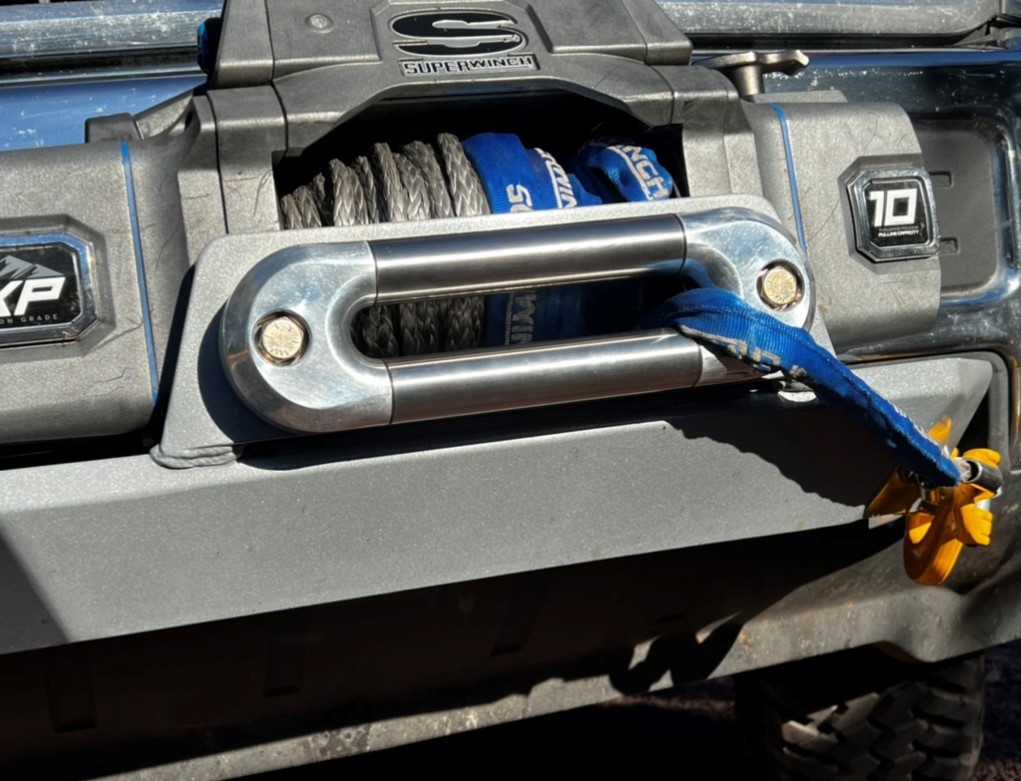
The use of synthetic winch rope (the material being ultra-high-molecular-weight polyethylene (UHMWPE) sold under brand like Amsteel Blue, Dyneema and Plasma Rope) spawned a new debate: Hawse or roller fairleads?
In the early days of converting existing winches from wire to synthetic rope, worn roller fairleads needed to be replaced. Synthetic is strong, but easily cut. A steel roller fairlead used with wire rope will commonly develop nicks and burrs that can damage synthetic line.
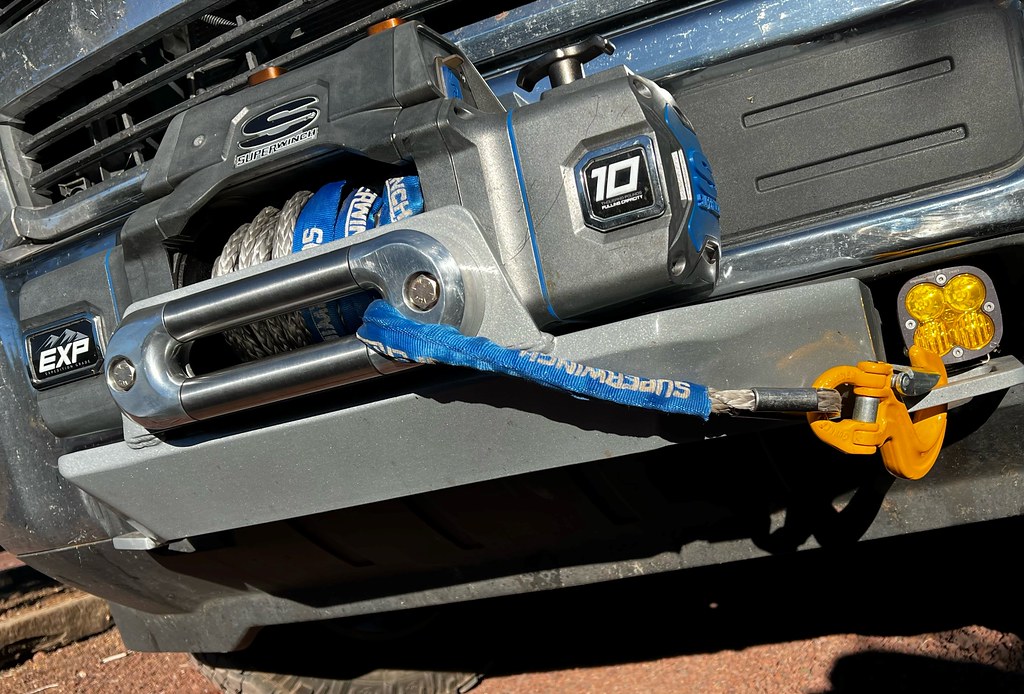
Among the early adopters of synthetic winch rope were rock-crawling competitors. Hawse fairleads were already popular for their superior clearance and damage resistance.
Somewhere along the way the belief developed that a hawse fairlead was better, or even required, with synthetic winch rope. Turns out, neither are true.
|
Hawse Fairlead |
|
|
Pro |
Con |
|
Simple Low profile One piece - No moving parts Radiused front edge for synthetic line Steel or aluminum Lighter weight |
Back edge often only slightly radiused can significantly contact winch rope Friction is directly on the rope |
|
Roller Fairlead |
|
|
Pro |
Con |
|
Multiple parts Large radius rollers Minimal friction on rope since roller moves on a bolt/pin axle |
Sticks out farther Perceived as older technology Heavier Large radius rollers |


It seems the Hawse has so many advantages, why should anyone use roller fairleads for synthetic rope? Because the primary job of a fairlead is never performed better by a hawse as compared to a roller. The primary job of a fairlead is to “guide … the running rigging … and keep[…] it from chafing” (See https://www.merriam-webster.com/dictionary/fairlead#h1 definition of “fairlead”). A hawse may guide well, but it is always chafing.
Another criticism is that the synthetic rope can get pinched if pulled into the corner of a roller fairlead where the horizontal and vertical rollers overlap. While possible at excessive fleet angle and if there is not adequate roller overlap, in practice it’s a non-issue with most roller fairleads. Excessive fleet angle should be avoided with both roller and hawse fairleads for multiple reasons. Excessive fleet angle is more damaging to synthetic rope on a hawse due to the friction.
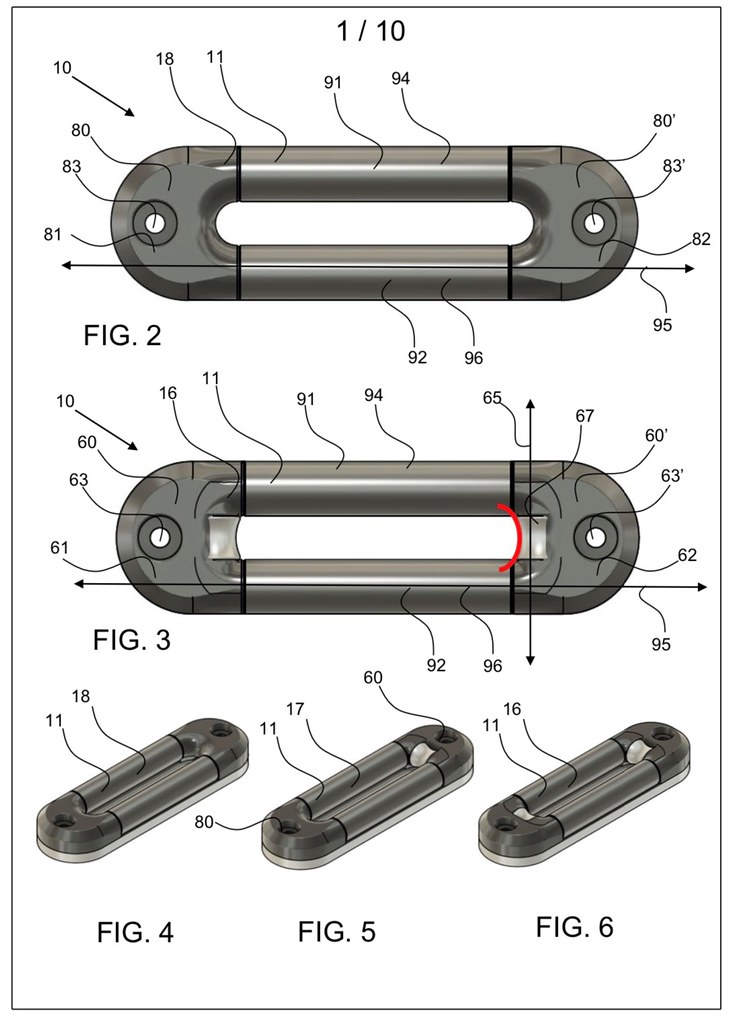
Well now, like the famous 1970’s Television commercial “You’ve got chocolate in my peanut butter/You’ve got peanut butter in my chocolate” we have the Hawse Pro. The Hawse Pro is a hawse in name only. It’s a game changer. Hawse Pro looks like a hawse and mounts like a hawse, but performs like a roller. Because it is a roller.
Created (patent pending) by Max Gremillion, a member of the family that perfected and still manufactures the Pull-Pal ground anchor, the Hawse Pro is a highly engineered low-profile roller fairlead. The machined aluminum housing has a hawse profile containing stainless steel rollers. A variety of configurations are possible, from two to four rollers. Roller endplay – and possible pinch points – are said to be eliminated by high density bushings and tight tolerances.

We are excited to see a well-made option for those who want or need the look and profile of a hawse fairlead but want to protect themselves and their expensive synthetic winch rope with the performance only rollers can provide.
www.hawsepro.com for pre-order/email inquiries. Shipping estimated first quarter 2022.
Pricing:
Model # 2.12 (two roller hybrid) $529.69 + shipping
Model # 4.12 (Four roller) $625.69 + shipping
To get your copy of the
Fall 2021 Issue:



Follow us on Facebook, Twitter, and Instagram to get up-to-date industry news, events, and of course, amazing adventures, stories, and photos!